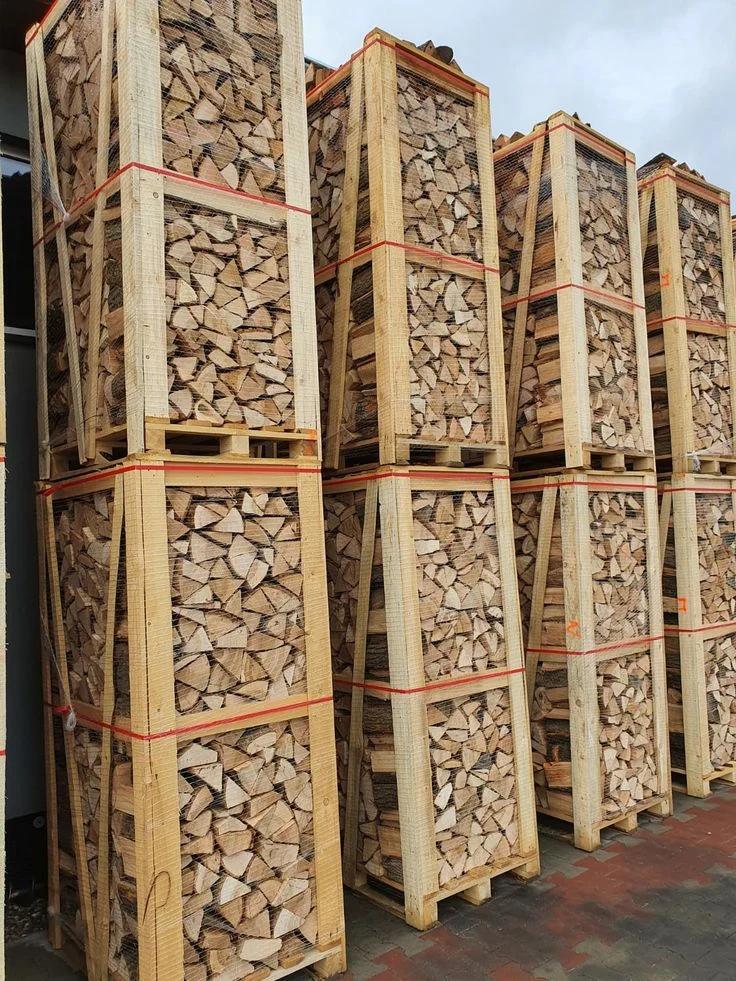
Why choose kiln-dried firewood?
More heat, less smoke, a cleaner chimney: the concrete benefits of truly dry wood.
By Foyerwood · October 4, 2026 · 3 min read
Freshly cut wood often contains 40–50% water. Before it can heat your home, the fire has to boil that water off — wasted energy.
Benefits of dry wood
- More heat: energy goes into your room, not into evaporating water.
- Less smoke and fewer particles: combustion is more complete.
- A cleaner chimney: less creosote, lower risk of chimney fires.
- Clean glass on stoves and inserts.
- Easier lighting and livelier flames.
Seasoned vs. kiln-dried
| Air-seasoned | Kiln-dried | |
|---|---|---|
| Drying time | 12–24 months | A few days in a kiln |
| Typical moisture | 20–25% | Often below 18% |
| Price | Lower | Higher |
| Best for | Main heating, large supply | Modern stoves, convenience, small storage |
Kiln drying also reaches temperatures that kill insects and their eggs, which is why many states accept certified heat-treated firewood when moving wood is regulated.
How to check
Dry wood is lighter, sounds hollow when two logs knock together, and shows cracks on the ends. The most reliable test is a moisture meter on a freshly split face: below 20%, it's ready.
Every product page shows the target moisture announced by our partner supplier.
From theory to practice
Estimate your needs for the winter and discover matching products.
Read next
4 min read
Which firewood should you choose to heat your home?
Hardwoods, softwoods and mixed loads: how to pick the right species for your stove and your needs.
3 min read
Oak vs. birch firewood: what's the difference?
Two popular firewoods with very different behavior in the stove. Which one fits your needs?
3 min read
How to store firewood the right way
Cover, airflow and ground clearance: simple rules to keep your wood dry all season.